If you’re thinking about moving home but your current mortgage deal still has months or even years left to run, you’re probably wondering:
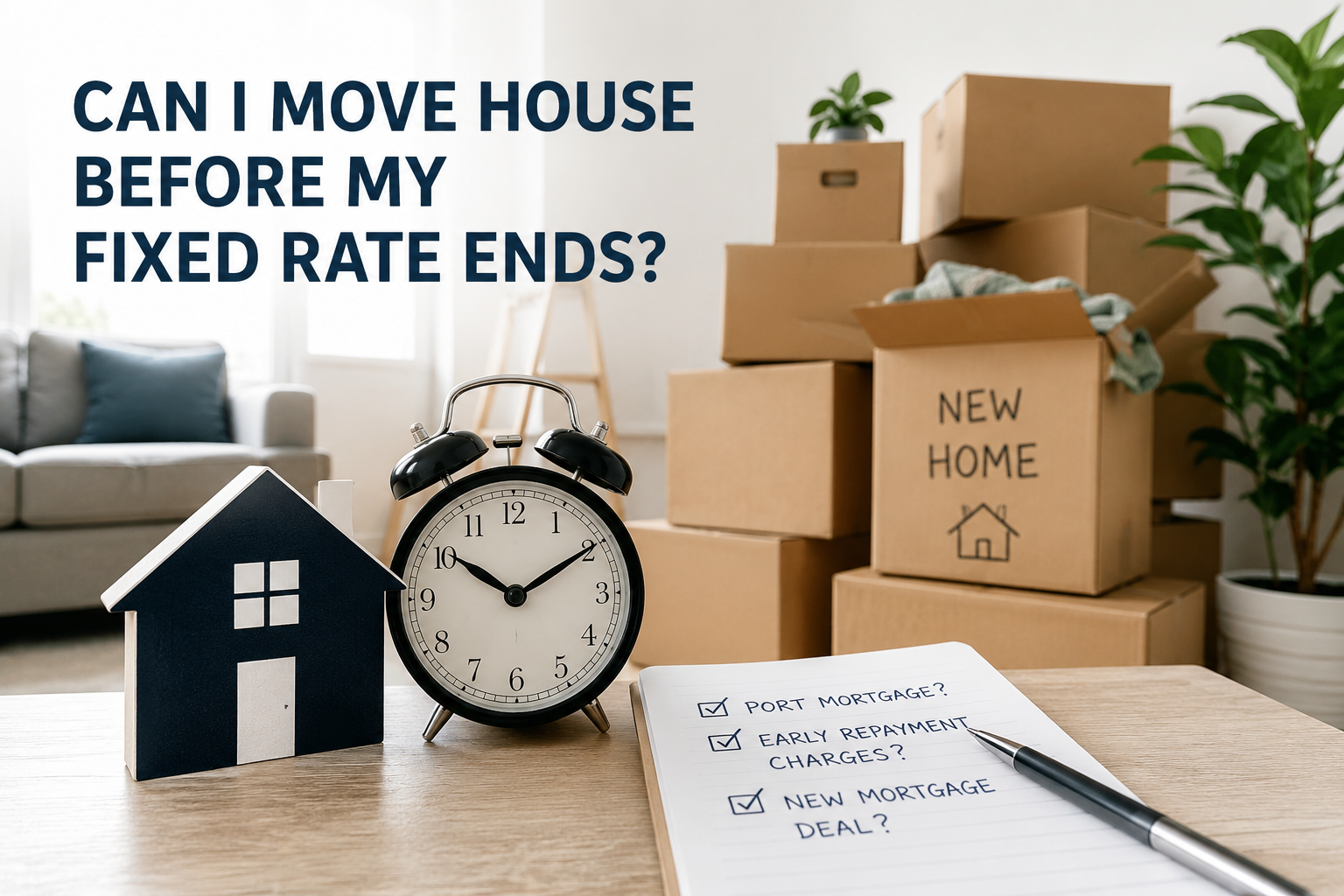
Can I move house before my fixed-rate mortgage ends?
The good news is yes, you usually can. However, there are several things to consider before putting your home on the market.
In this guide, we’ll explain your options and what costs you may need to factor in.
The Short Answer
Having a fixed-rate mortgage doesn’t stop you from moving house.
The main question is whether you’ll:
- Take your existing mortgage with you (known as porting), or
- Repay your mortgage (possibly having to pay an early repayment charge) and take out a completely new one.
The right option depends on your lender, your circumstances, and the property you’re buying.
What Is Mortgage Porting?
Most fixed-rate mortgages are portable, meaning you can transfer your existing mortgage product to your new home.
This allows you to keep your current interest rate for the remaining fixed period.
For example:
- You currently owe £180,000
- Your fixed rate is 3.99%
- You have 2 years remaining
- You’re moving to a larger property
Rather than paying off your mortgage and losing your rate, your lender may allow you to move the mortgage across to your new property.
If you need to borrow more, the additional borrowing is usually taken on a separate mortgage product at today’s interest rates.
Do All Mortgages Allow Porting?
Many lenders offer portable mortgages, but it’s important to understand that:
Porting isn’t automatic.
Your lender will still assess:
- Your income
- Your affordability
- Your credit history
- The new property’s suitability
Even if your current mortgage is portable, you’ll still need to qualify for the new borrowing.
What Happens If I Need a Bigger Mortgage?
Many people move because they’re buying a more expensive home.
In this situation, your mortgage might look something like this:
| Existing Mortgage | Additional Borrowing |
|---|---|
| £180,000 at 3.99% | £90,000 at today’s rate |
This is known as a split mortgage, where each part has its own interest rate and fixed period.
Different lenders manage these arrangements differently, so it’s worth getting advice before committing.
What If I Don’t Port My Mortgage?
You can choose to repay your existing mortgage and move to a completely different lender instead.
This may be worthwhile if:
- Another lender offers a better overall deal
- Your current lender won’t lend enough
- The new lender has products that better suit your circumstances
However, you’ll usually need to consider any Early Repayment Charges (ERCs).
What Are Early Repayment Charges?
Most fixed-rate mortgages include an Early Repayment Charge (ERC) if you repay the mortgage before the end of the fixed period.
These charges are often a percentage of the outstanding mortgage balance.
For example:
| Mortgage Balance | ERC | Cost |
|---|---|---|
| £200,000 | 3% | £6,000 |
That doesn’t necessarily mean changing lender is a bad idea—it simply means the savings from a new mortgage would need to outweigh the cost of the ERC.
Your mortgage adviser can compare both options to see which works out best financially.
What If My New Home Is Cheaper?
If you’re downsizing, you may need a smaller mortgage.
In some cases, repaying part of your mortgage when you move could trigger an Early Repayment Charge on the amount you’re reducing.
Each lender has different rules, so it’s important to check before making any decisions.
Can I Move If My Fixed Rate Is Nearly Finished?
Absolutely.
If your fixed rate only has a few months left, there may be other options available.
Depending on the timing, it might make sense to:
- Wait until your fixed rate ends
- Move onto your lender’s standard variable rate temporarily
- Secure a new mortgage for the purchase
The best approach depends on your moving timescales and the costs involved.
Should I Stay With My Current Lender?
Not necessarily.
Many homeowners assume they have to stay with their existing lender when moving home.
In reality, it’s often worth comparing the whole market.
Sometimes staying put makes perfect sense.
Other times, paying an Early Repayment Charge and switching lender can actually work out cheaper over the longer term.
Every situation is different.
How a Mortgage Broker Can Help
Moving home is often more complicated than buying your first property.
A mortgage broker can:
- Compare your current mortgage with new deals
- Calculate whether porting is worthwhile
- Explain any Early Repayment Charges
- Check affordability before you make an offer
- Arrange any additional borrowing if required
- Handle the application from start to finish
Getting advice early can help you avoid unexpected costs and ensure you’re making the most cost-effective decision.
Frequently Asked Questions
Can I sell my house before my fixed-rate mortgage ends?
Yes. You can sell at any time, although you may need to pay an Early Repayment Charge unless you port your mortgage or qualify for another exemption.
Is porting a mortgage guaranteed?
No. Even if your mortgage is portable, your lender will reassess your affordability and the new property before approving the transfer.
Can I switch lenders while in a fixed-rate deal?
Yes, although you’ll usually need to repay your current mortgage and may incur an Early Repayment Charge.
Is porting always the cheapest option?
Not always. Sometimes another lender offers a better overall deal, even after factoring in any Early Repayment Charges.
Thinking About Moving Home?
If you’re planning a move, it’s worth reviewing your mortgage options before you start viewing properties.
At Mortgage Links, we compare mortgages from across the market and can help you decide whether porting your existing mortgage or switching to a new lender is the better financial choice.
Get in touch today for personalised mortgage advice and we’ll help you make your move with confidence.
🔗 Helpful Links
- Loan to Value Explained — The Complete Guide to Smarter Mortgage Decisions
- Why Use a Mortgage Broker? Top 7 Reasons to Get Expert Mortgage Advice
- AIPs, DIPs and MIPs- What’s the Difference?
- 7 Key Costs To Budget For When Buying A Home
- MoneyHelper (UK government-backed)
- FCA
🚀 Book a Free Consultation Today
Speaking to a specialist broker can help you understand how much you may be able to borrow using retained profits rather than traditional salary and dividend calculations.
💬 Book a free consultation today