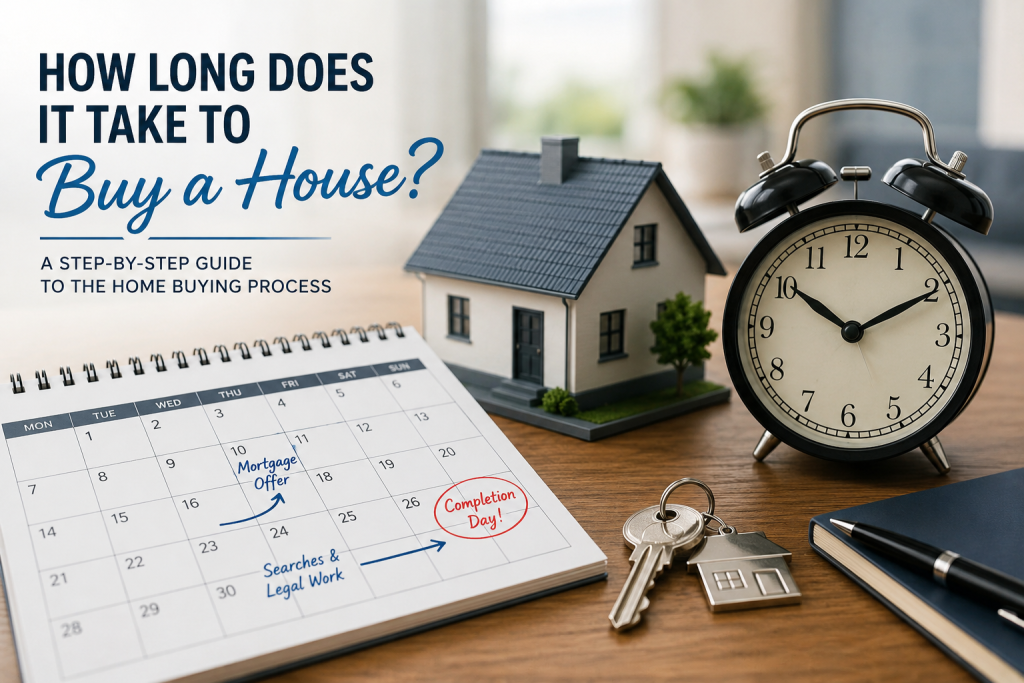
Buying a house is exciting, but it can also feel like a long and uncertain process. One of the questions we’re asked most often is:
“How long does it actually take to buy a house?”
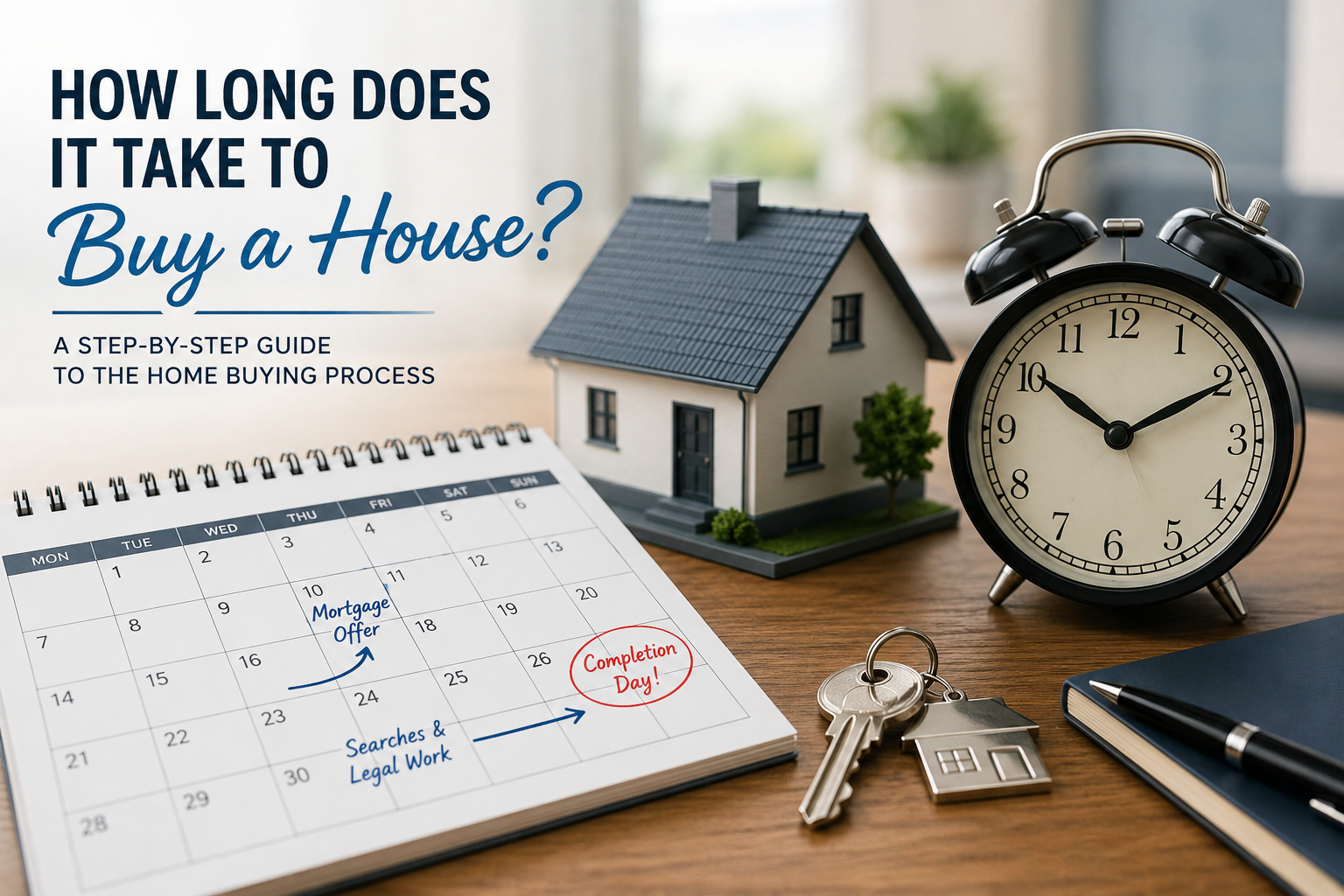
The answer depends on several factors, but in most cases, buying a property in the UK takes between 8 and 16 weeks from having an offer accepted to collecting the keys. Some purchases can complete in as little as four weeks, while others can take several months.
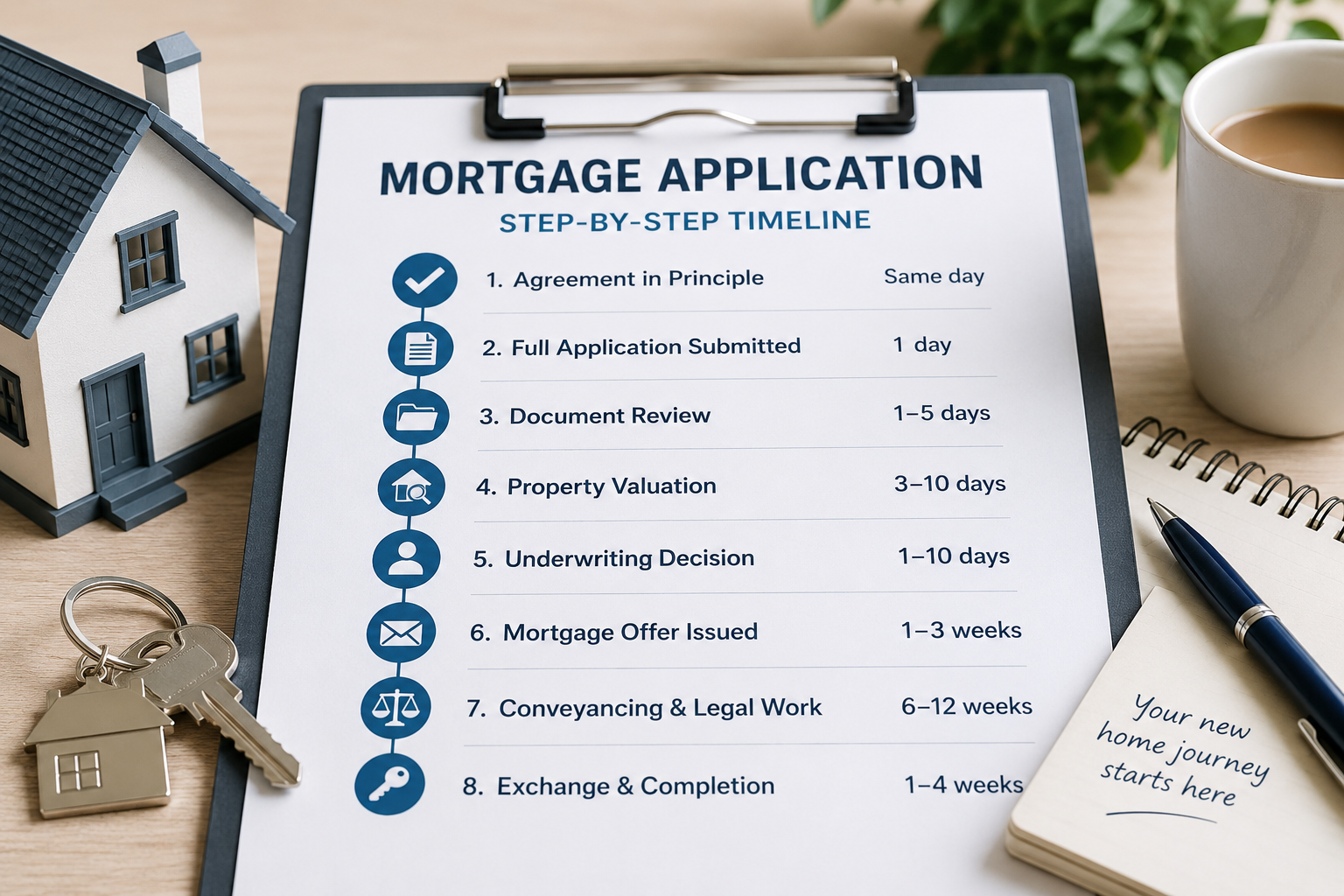
Stage 1: Get a Mortgage in Principle (1 Day)
Before you even start viewing properties, it’s a good idea to obtain a Mortgage in Principle (MIP), sometimes called a Decision in Principle (DIP).
This gives you:
- An idea of how much you can borrow.
- Confidence when making offers.
- Reassurance to estate agents and sellers that you’re a serious buyer.
At Mortgage Links, we can often arrange this the same day.
Stage 2: Find the Right Property (A Few Days to Several Months)
This is usually the most unpredictable part.
Some buyers find their dream home on the first viewing, while others spend several months searching before making an offer.
There’s no right or wrong timeline—it’s important to find a property that’s right for you rather than rushing into a purchase.
Stage 3: Offer Accepted (1–3 Days)
Once you’ve found a property:
- You make an offer.
- The seller may accept, reject or negotiate.
- Once accepted, the legal process begins.
At this point, you’ll usually instruct a solicitor if you haven’t already.
Stage 4: Submit Your Mortgage Application (1–3 Days)
Once your offer is accepted, your mortgage adviser will submit your full application.
You’ll normally need documents such as:
- Payslips
- Bank statements
- Proof of ID
- Proof of deposit
If everything is ready, the application can often be submitted within a day or two.
Stage 5: Mortgage Valuation & Underwriting (1–3 Weeks)
The lender will:
- Carry out a valuation of the property.
- Review your income and documents.
- Ask any additional questions if required.
If everything is straightforward, your mortgage offer may be issued within one to three weeks.
Some lenders are quicker than others, and more complex cases can take longer.
Stage 6: Conveyancing Searches & Legal Work (4–12 Weeks)
This is often the longest part of buying a house.
Your solicitor will:
- Carry out local authority searches.
- Check the title.
- Review contracts.
- Raise enquiries with the seller’s solicitor.
- Arrange exchange and completion.
Delays often happen because everyone in the chain needs to move at the same pace.
Stage 7: Exchange of Contracts
Once everyone is ready:
- Contracts are exchanged.
- The completion date is agreed.
- The purchase becomes legally binding.
At this stage, it’s usually safe to arrange removals and give notice on rented accommodation if applicable.
Stage 8: Completion Day
This is the day you’ve been waiting for.
Your solicitor transfers the money to the seller, and once the funds have been received, you’ll be able to collect the keys from the estate agent.
Congratulations—you own your new home!
What Can Delay Buying a House?
Unfortunately, delays are quite common.
Some of the most common reasons include:
- Property chains.
- Slow responses from solicitors.
- Mortgage lenders requesting additional information.
- Problems found during surveys.
- Delays with local authority searches.
- Buyers or sellers changing their circumstances.
While not every delay can be avoided, having an experienced mortgage adviser and proactive solicitor can help keep things moving.
How to Speed Up the Process
There are several things you can do to reduce delays:
- Get a Mortgage in Principle before viewing properties.
- Have your documents ready.
- Choose an experienced mortgage broker.
- Instruct a solicitor as soon as your offer is accepted.
- Respond quickly to any requests from your lender or solicitor.
- Keep regular contact with everyone involved.
Preparation can often save weeks.
Frequently Asked Questions
How long does it take to get a mortgage approved?
Many lenders issue mortgage offers within one to three weeks, although this varies depending on the lender and the complexity of your application.
Can I buy a house in under a month?
Yes—but it’s unusual. Cash purchases or chain-free properties can sometimes complete within four weeks.
What takes the longest when buying a house?
The conveyancing process is usually the longest stage, particularly if there is a long property chain or legal issues that need resolving.
Should I wait until I’ve found a house before speaking to a mortgage adviser?
No. Speaking to a mortgage adviser first means you’ll understand your budget, have a Mortgage in Principle ready, and be in a stronger position when making an offer.
Need Help Buying Your First Home?
At Mortgage Links, we help buyers across the UK secure the right mortgage while making the whole process as smooth as possible.
Whether you’re buying your first home, moving house or remortgaging, we’ll guide you from your Mortgage in Principle right through to getting the keys.
Get in touch today for free, no-obligation mortgage advice and let us help you move home with confidence.
🔗 Helpful Links
- Loan to Value Explained — The Complete Guide to Smarter Mortgage Decisions
- Why Use a Mortgage Broker? Top 7 Reasons to Get Expert Mortgage Advice
- AIPs, DIPs and MIPs- What’s the Difference?
- 7 Key Costs To Budget For When Buying A Home
- MoneyHelper (UK government-backed)
- FCA
🚀 Book a Free Consultation Today
Speaking to a specialist broker can help you understand how much you may be able to borrow using retained profits rather than traditional salary and dividend calculations.
💬 Book a free consultation today