Buying your first home is exciting — but it can also feel overwhelming. From saving a deposit to understanding mortgages and dealing with solicitors, it’s easy to feel like you’re learning a new language as a first time buyer.
The good news? You’re not alone — and we’re here to guide you every step of the way.
Whether you’re just starting to save or already house-hunting, this guide breaks down everything first-time buyers need to know in 2025.

🏦 1. How Much Deposit Do You Need As A First Tome Buyer?
In most cases, you’ll need at least 5% of the property price as a deposit. So, for a £200,000 home, you’d need at least £10,000.
That said:
- The more you put down, the better the interest rates
- 10%–15% deposits open up more mortgage options
- Some lenders offer 100% mortgages with family support (e.g. guarantor or security) or based on 12 month rental payments
💡 Tip: Use a Lifetime ISA if you’re eligible — the government adds a 25% bonus to your savings, up to £1,000 a year.
📉 2. What Can You Afford to Borrow As A First Time Buyer?
Lenders typically offer 4 to 4.5x your income, though some go up to 5x or more depending on your profession, deposit size, or credit score.
They’ll also look at:
- Your monthly expenses (including rent, debts, childcare)
- Your credit score (you can get a free trial of CheckMyFile here) and financial history
- Job stability and contract type
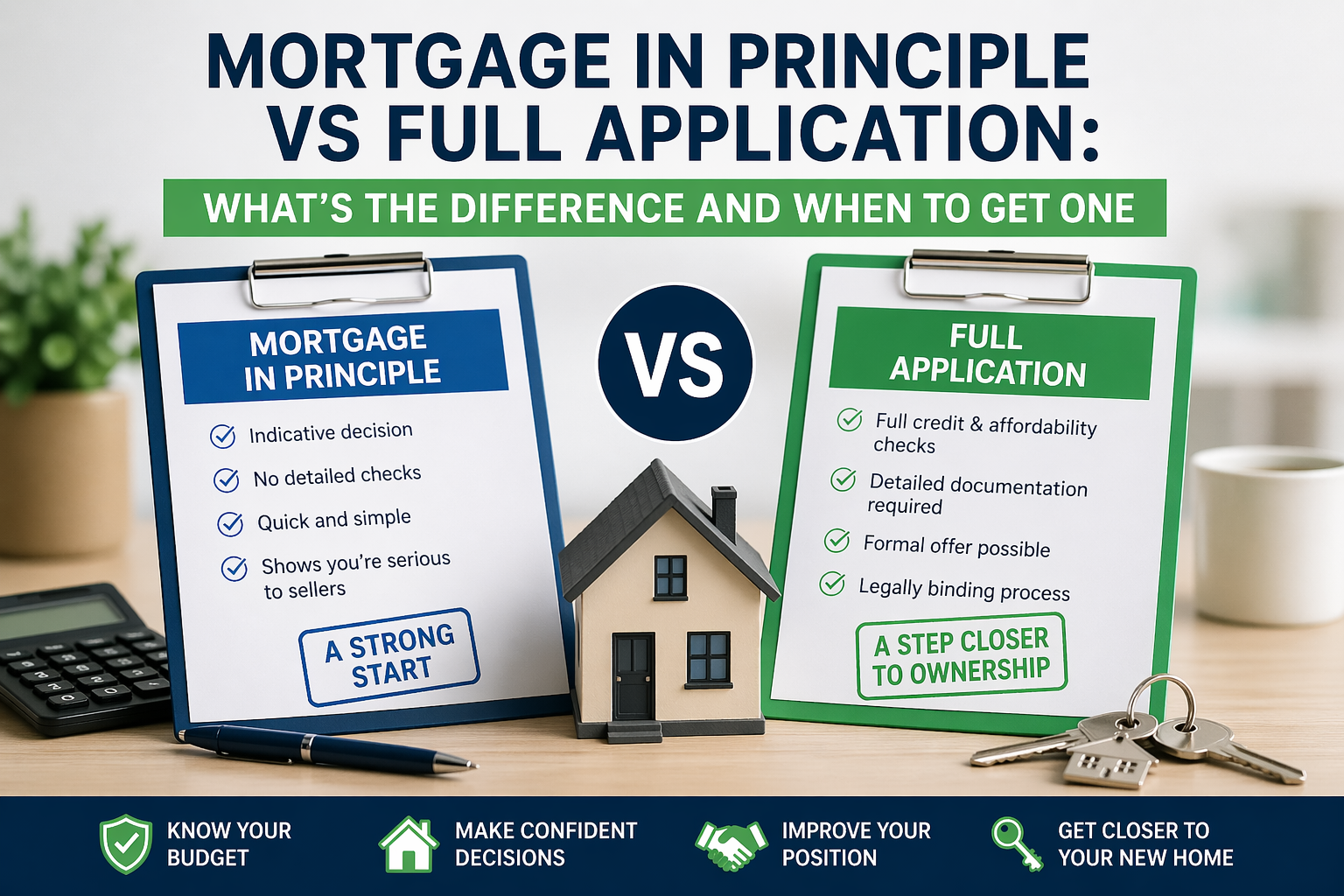
💡 Tip: Get a Decision in Principle (DIP) early — it gives you an idea of how much you can borrow and shows estate agents you’re serious.
🏡 3. How the Mortgage Process Works As A First Time Buyer
Here’s a simplified step-by-step:
- Speak to a mortgage broker (ideally before house-hunting)
- Get a Decision in Principle
- Start viewing properties
- Make an offer
- Apply for your mortgage (with help from your broker)
- Instruct a solicitor or conveyancer
- Carry out searches and surveys
- Get your mortgage offer
- Exchange contracts
- Complete — and move in!
💡 Tip: The whole process usually takes 8–12 weeks after your offer is accepted — but can take longer.
🧾 4. What Fees Should You Budget For?
Beyond your deposit, you’ll need to budget for:
- Solicitor / conveyancer fees (£1,500–£2,000- book a survey here)
- Valuation and survey fees (can range from £500–£1,000)
- Moving costs (van hire, removals)
- Stamp Duty (handy HMRC calculator here)
💡 Tip: We help you budget for these costs in your mortgage appointment so there are no surprises.
📑 5. What Mortgage Is Best for You as a First Time Buyer?
There are several types of mortgages:
- Fixed rate — your payments stay the same for 2, 3, 5 or 10 years
- Tracker/variable — your payments go up/down based on the Bank of England base rate
- Offset — links your savings to your mortgage balance to reduce interest
💡 Tip: Most first time buyers choose a fixed-rate mortgage for security — but the right option depends on your income, plans, and risk comfort.
❓6. What If You’ve Got Credit Issues, Low Income, or Are Self-Employed?
Don’t worry — it’s still possible.
We work with lenders who accept:
- Thin or poor credit files
- Self-employed income (with 1 year’s accounts in some cases)
- Zero-hour contracts
- Gifted deposits from family
💡 Tip: A good broker (like us) can match you with the right lender and help explain your situation clearly.
🤝 7. Why Work With a Broker?
A good mortgage broker doesn’t just find you a mortgage — they guide you through the entire homebuying journey, from planning to completion and beyond.
At Mortgage Links, we:
- Compare over 90 different lenders (many not available direct)
- Handle all the paperwork
- Liaise with estate agents, solicitors and lenders
- Give you clear, honest advice from start to finish
🎯 Ready to Start Your Homebuying Journey?
We’re here to make buying your first home feel simple, stress-free, and even exciting. Whether you’re just starting or ready to go, book a free chat with us today.